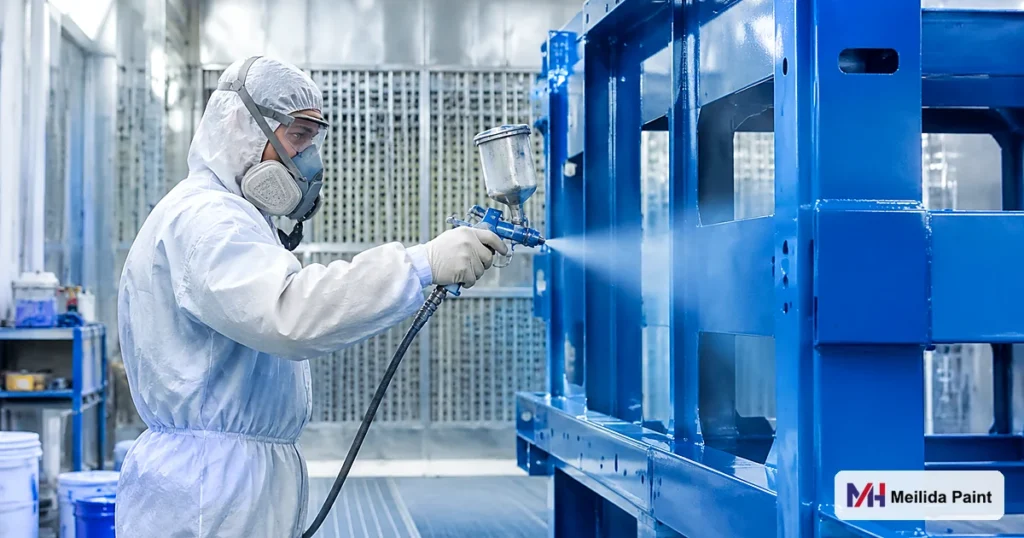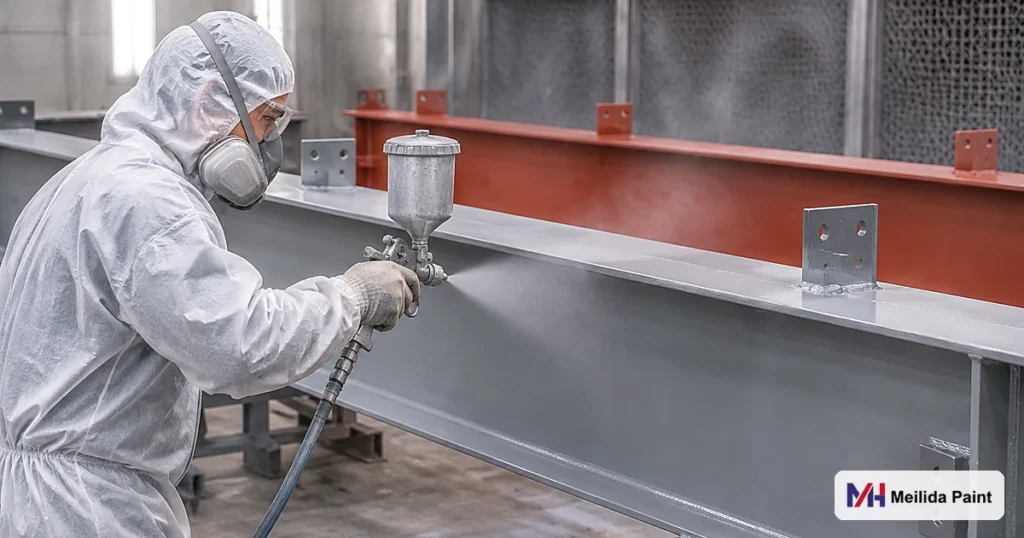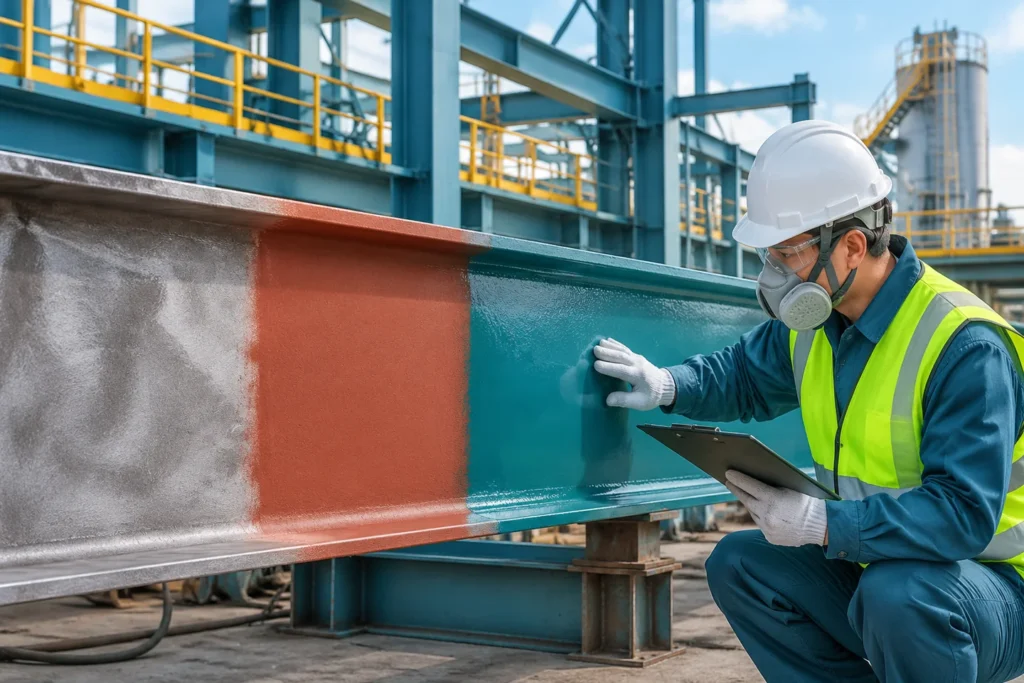
A reliable steel coating specification begins with surface preparation and corrosion exposure. The primer provides adhesion and initial protection, intermediate coats build barrier thickness, and the topcoat supplies weather, chemical, color and UV performance.
Anti-rust paint is not a complete specification. Steel protection depends on the condition of the metal, preparation standard, corrosion environment, dry-film thickness, coating compatibility and maintenance plan.
1. Inspect the steel condition
Identify new steel, weathered steel, galvanized metal or previously coated surfaces. Record rust, mill scale, oil, salts, weld spatter, sharp edges and coating failure. Complex structures also require attention at bolts, welds, corners and water traps.
2. Define surface preparation
Abrasive blasting can create a clean surface and anchor profile for high-performance systems. Power-tool cleaning may be practical for maintenance but normally leaves a different condition. Preparation must match the selected primer and project standard.
3. Select the primer
Common routes include zinc-rich primers, epoxy primers, anti-corrosive alkyd primers and water-based metal primers. Selection depends on environment, preparation, application restrictions, compatibility and target service life.
4. Build barrier thickness
Intermediate epoxy or high-build layers reduce the path for water, oxygen and contaminants. Stripe coats at edges, welds and bolts help compensate for thin-film areas. Measure wet and dry film thickness instead of relying only on the number of coats.
5. Choose the topcoat
Topcoats provide color, gloss, UV stability, weathering, cleanability and additional chemical resistance. Polyurethane or acrylic routes may be considered for exterior color retention, while other finishes may suit indoor machinery or moderate exposure.
Information required for system selection
- Steel type and current condition
- Preparation method and standard
- Indoor, outdoor, coastal, chemical or immersion exposure
- Required service life and maintenance access
- Application method and curing conditions
- Color, gloss, film thickness and destination
Request a written system showing preparation, primer, intermediate coat, topcoat, thickness per layer, recoat interval and application conditions.
Example coating-system routes
A moderate indoor steel system may use an anti-corrosive primer and compatible finish. More demanding exterior structures may use zinc-rich or epoxy primer, high-build epoxy intermediate and a weather-resistant polyurethane topcoat. Immersion, high heat and severe chemical exposure require product-specific systems and should not be inferred from a general steel-paint label.
Application and quality-control checks
Record air and steel temperature, relative humidity, dew-point margin, mixing ratio, induction time and pot life. Inspect surface cleanliness and profile before coating, then check wet-film and dry-film thickness. Holidays, pinholes, sagging, overspray and incomplete edge coverage should be corrected according to the approved procedure.
Maintenance planning
A maintainable system considers access, future recoating and compatibility with the existing finish. Early spot repair can prevent widespread corrosion. Buyers should retain the product specification, batch records, color reference and application report for repeat maintenance orders.
Questions related to this coating topic.
Can anti-rust topcoat be applied directly to rust?+
Direct-to-rust claims are product specific and do not remove the need to eliminate loose rust, oil, salts and weak material. Higher-performance systems normally require defined preparation.
What is the purpose of zinc-rich primer?+
Zinc-rich primer can provide sacrificial protection when correctly applied to suitably prepared steel and used within a compatible system.
Why is dry-film thickness important?+
Insufficient thickness reduces barrier protection, while excessive thickness may cause curing or cracking problems. Each layer should meet the agreed range.