
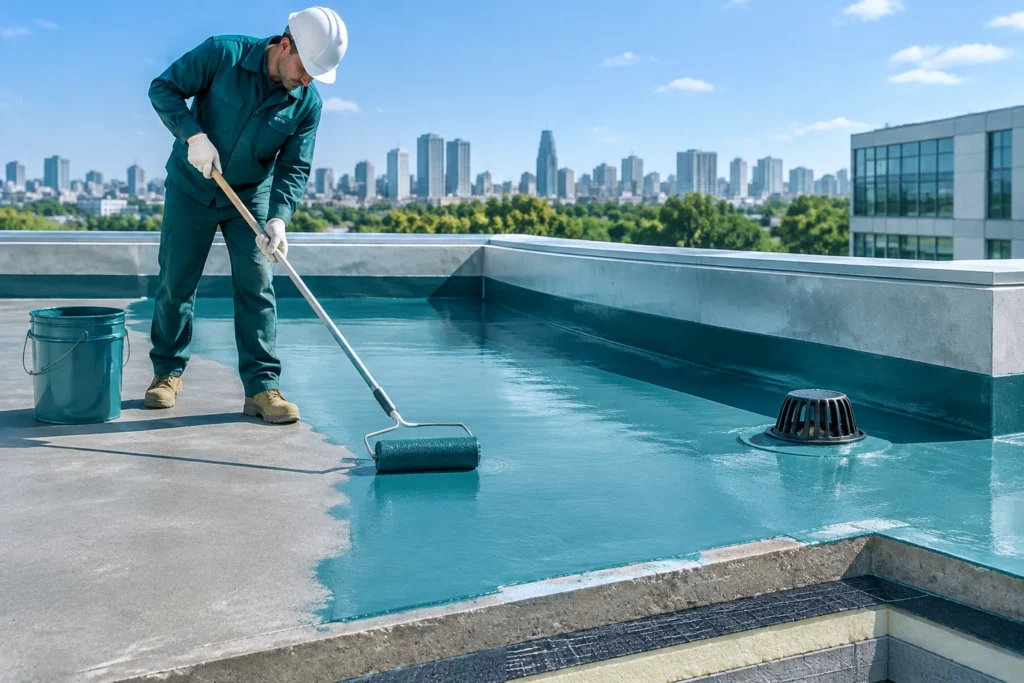
Waterproofing selection depends on where water comes from, whether the substrate moves, UV and temperature exposure, crack and joint details, drainage and the protection applied above the membrane. A coating alone cannot correct structural cracks or poor detailing.
Waterproof coating projects fail most often at cracks, drains, corners, penetrations and incompatible substrates, not in the center of an ideal test panel. Buyers should define the location and detailing before selecting a product.
Roof waterproofing
Roofs require UV, rain, temperature and ponding-water consideration. Check slope and drainage, parapets, outlets, movement joints and existing membranes. An exposed roof coating may need weather and UV resistance, while a protected membrane may prioritize flexibility and compatibility.
Bathroom and wet-area waterproofing
Bathrooms, kitchens and balconies normally require a continuous membrane below tile or a protective finish. Corners, pipe penetrations and floor-to-wall transitions often need reinforcement. Confirm compatibility with tile adhesive, screed or protective mortar.
Basement and below-grade waterproofing
Identify positive-side or negative-side water pressure, concrete cracks, construction joints and persistent moisture. Some cementitious products tolerate damp substrates, while other membranes require dry, prepared concrete.
Important selection factors
- Concrete, masonry, metal or existing membrane substrate
- Static cracks, moving joints and expected movement
- UV exposure and temperature range
- Positive or negative water pressure
- Required elasticity, thickness and reinforcement
- Protection layer, tile adhesive or topcoat compatibility
Application control
Clean and repair the substrate, prime when required, reinforce details, control consumption per square meter and inspect pinholes. Multiple controlled coats are usually safer than one uncontrolled thick application. Flood testing or other project-specific checks should follow the approved method.
For a useful factory recommendation, send photos, substrate type, area, water source, cracks, exposure, required finish, package size, quantity and destination.
Compare the main waterproof coating routes
Acrylic waterproof coatings are commonly considered for exposed roofs where UV stability and easy maintenance matter. Polyurethane membranes can offer elasticity and seamless application but require careful moisture and curing control. Cementitious systems are practical on concrete and masonry, including some damp substrates, but flexibility differs by grade. Bituminous and hybrid systems serve other exposure and protection requirements.
Detailing determines performance
Apply reinforcement or additional material at internal corners, outlets, pipes, joints and cracks as specified. Terminations must prevent water from tracking behind the membrane. On roofs, correct drainage is essential because continuous ponding may exceed the design of some products.
Questions for procurement and quality control
- What dry-film thickness and consumption are required?
- Is the membrane exposed or covered?
- What primer and reinforcement are compatible?
- How are cracks and moving joints treated?
- What curing time is required before rain, tiling or flood testing?
- Which inspection and repair procedures are recommended?
Compare complete installed systems rather than only price per kilogram. A lower consumption claim should be checked against solids, thickness and substrate texture.
Questions related to this coating topic.
Is waterproof paint the same as a waterproof membrane?+
Not always. Decorative water-resistant paint and a specified waterproof membrane have different film thickness, elasticity and detailing requirements.
Can waterproof coating stop active leakage?+
Active water, structural cracks and high pressure may require repairs, injection, drainage or other engineering measures before a coating system is applied.
How much waterproof coating is required?+
Consumption depends on product solids, required dry-film thickness, substrate texture and number of coats. Use the approved specification rather than a generic rate.