Compare metal coatings by substrate preparation, exposure, film build and application conditions, not carrier alone. Water-based does not mean hazard-free; review the exact product TDS and SDS.
Quick answer: Water-based metal coatings can reduce odor and solvent emissions but require suitable temperature, humidity, ventilation and flash-rust control. Solvent-based routes may offer practical advantages under some site conditions but introduce VOC, flammability and transport considerations.
This guide is written for distributors, importers, contractors, project teams and private-label buyers who need to compare coating systems on a consistent technical and commercial basis. Product selection should always be confirmed against the real substrate, exposure, application method and destination requirements.
Do not compare only by carrier
Water-based and solvent-based describe delivery, not complete performance. Resin, pigment, primer, film thickness, preparation and curing conditions determine whether a system meets the requirement.
Water-based considerations
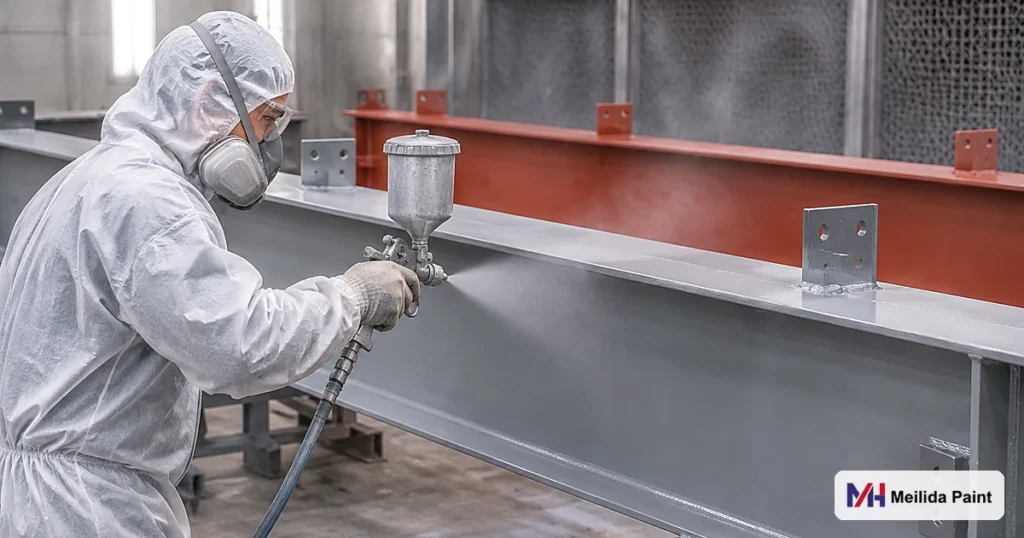
Water-based coatings can provide lower odor, easier cleanup and reduced solvent emissions. Low temperature, high humidity or poor airflow can delay water release and increase early-exposure risk.
Solvent-based considerations
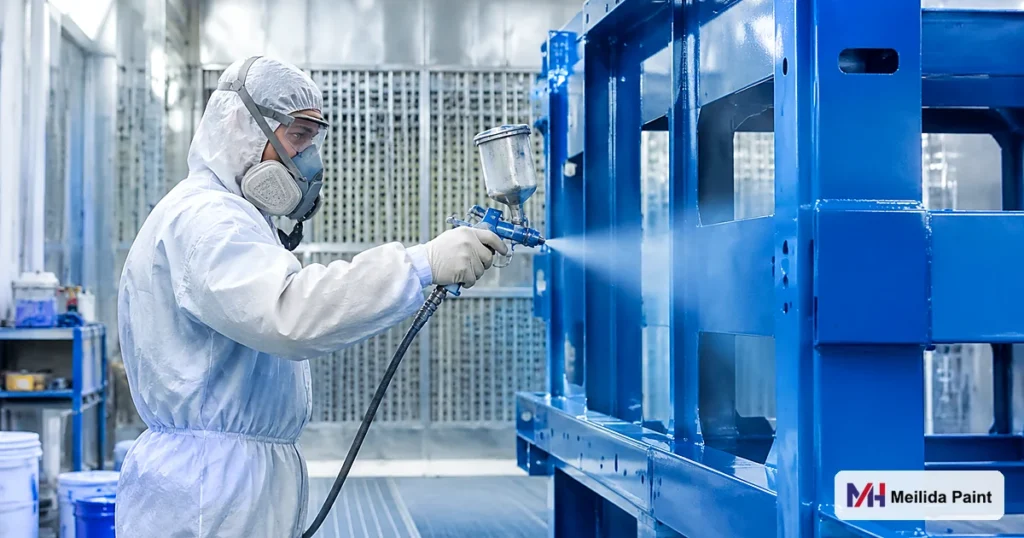
Solvent-based epoxies, alkyds and polyurethanes are established in many protective systems. They bring odor, flammability, worker-exposure and transport requirements that must be managed.
Technical comparison
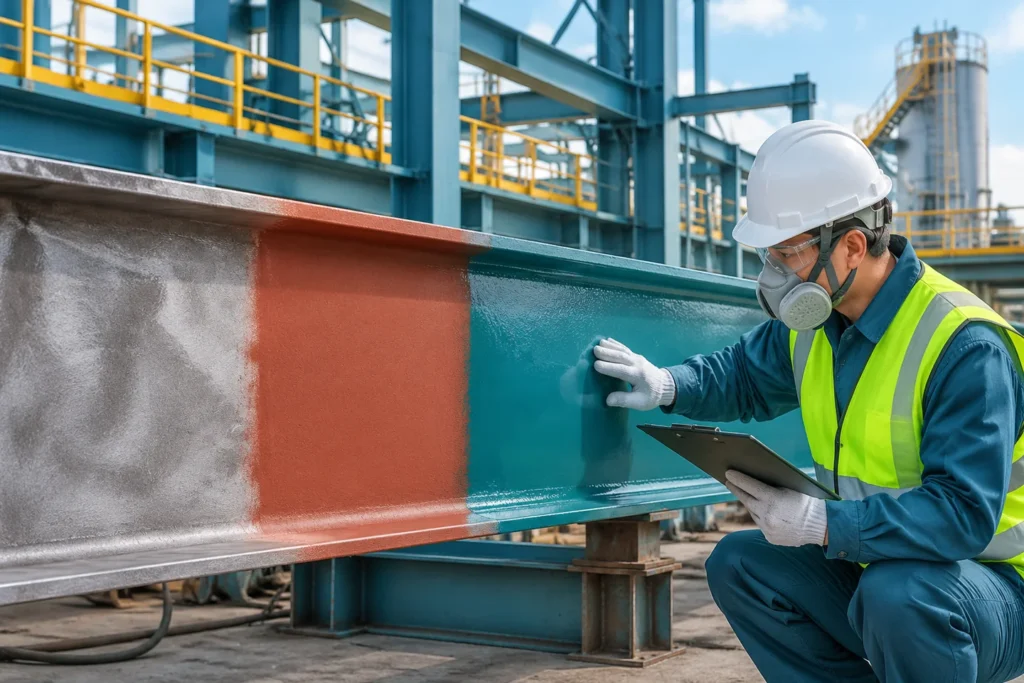
Compare adhesion, corrosion resistance, water and chemical exposure, UV stability, drying and overcoat time under actual project conditions. Standard laboratory drying may not predict a humid tropical site.
Buyer checklist
- Control steel temperature and dew point
- Provide airflow for drying
- Follow flash-rust guidance
- Protect from rain and condensation
- Confirm transport classification
Common specification and application mistakes
One common mistake is choosing a coating from the product name without defining the substrate and service conditions. Another is comparing price per bucket while ignoring net content, solids, practical coverage and required film build. Projects also fail when preparation, primer and repair materials are treated as optional.
Application climate matters. Temperature, humidity, condensation, wind and rain affect drying and curing. Mixing ratio, dilution, pot life and recoating intervals should be recorded during sample work. If local application practice differs from the supplier’s test conditions, complete a representative trial before commercial rollout.
How to compare quotations
Compare the complete system, practical coverage, applied thickness, number of coats, package net content, MOQ, production lead time and destination terms. A lower price per bucket may not mean a lower installed cost when coverage, preparation or performance differs.
Request the current TDS and SDS/MSDS for the exact product offered. Where performance is critical, identify the test method, acceptance value and sample approval process instead of relying on general marketing claims.
Sample approval and repeat-order control
Apply the sample on the intended or a representative substrate. Record preparation, primer, mix ratio, dilution, tools, film thickness, drying and curing. Evaluate appearance together with the performance relevant to the project. A liquid sample alone cannot demonstrate the behavior of a complete coating system.
After approval, retain a signed panel or drawdown and document the final product code, color, sheen, package, artwork and batch reference. This record helps the manufacturer and buyer identify changes and maintain consistency across repeat orders.
Information to send the manufacturer
Provide the substrate and condition, indoor or outdoor exposure, target performance, color or finish, application method, project area or estimated quantity, package size, destination and any OEM or private-label requirement. Photographs and a benchmark sample help the supplier recommend a more relevant route.
Discuss your coating requirement
Meilida Paint supports professional B2B buyers with coating selection, samples, OEM/ODM development, private-label packaging and export coordination. Send the application, estimated quantity and destination to request a technical recommendation and commercial quotation.
Questions related to this coating topic.
Are water-based coatings always safer?+
They can reduce solvent exposure, but every product requires SDS, PPE and proper handling.
Can they be applied in high humidity?+
Only within the product’s approved conditions.
Which route is better for export?+
Consider destination rules, transport, climate, application capability and performance.