Decorative texture coatings should be approved as a complete applied sample because tool technique, layer thickness, color, substrate and protective topcoat change the final appearance. Retain a signed panel and application steps for repeat orders.
Quick answer: Decorative texture coatings should be approved as a complete applied sample because tool technique, layer thickness, color, substrate and protective topcoat change the final appearance. Retain a signed panel and application steps for repeat orders.
This guide is written for distributors, importers, contractors, project teams and private-label buyers who need to compare coating systems on a consistent technical and commercial basis. Product selection should always be confirmed against the real substrate, exposure, application method and destination requirements.
The sample is part of the specification
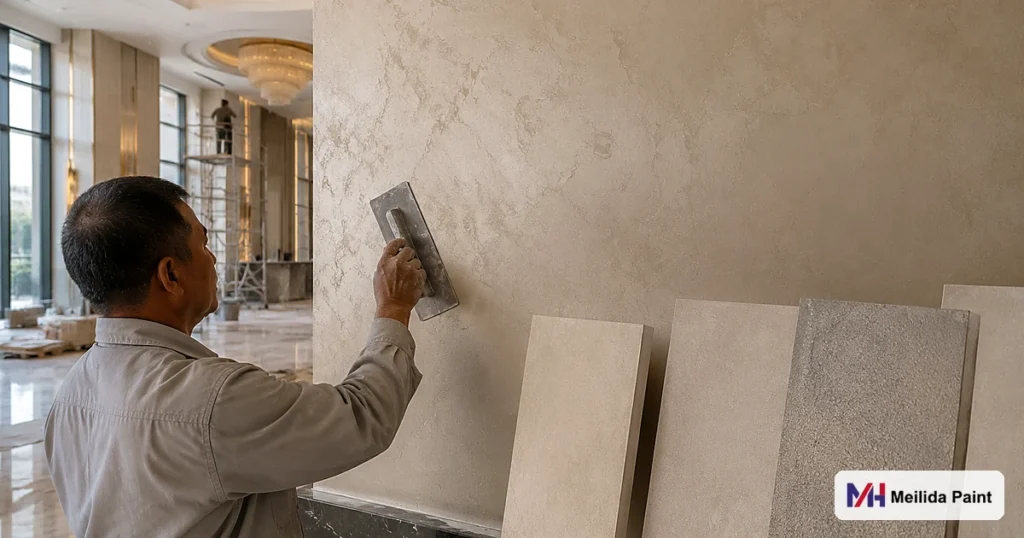
A liquid sample or color chip cannot define trowel pattern, depth, burnishing, texture scale and protective finish. Approve a physical panel made with the intended tools and complete layer sequence.
Define the finish
Record base color, accent color, texture size, gloss, direction and acceptable variation. Photograph the approved panel under diffuse and directional light.
Installer training
Many premium finishes require trained applicators. The supplier should provide a sample method while the buyer plans local trials. Large walls need sequencing and agreed boundaries to reduce visible transitions.
Commercial comparison
Coverage depends on texture and technique. Compare material consumption from the approved panel and include primer, base, decorative material, sealer, tools and training in system cost.
Buyer checklist
- Panel substrate and dimensions
- Primer and base coat
- Number of decorative layers
- Tool and movement
- Drying between layers
- Protective sealer or topcoat
Common specification and application mistakes
One common mistake is choosing a coating from the product name without defining the substrate and service conditions. Another is comparing price per bucket while ignoring net content, solids, practical coverage and required film build. Projects also fail when preparation, primer and repair materials are treated as optional.
Application climate matters. Temperature, humidity, condensation, wind and rain affect drying and curing. Mixing ratio, dilution, pot life and recoating intervals should be recorded during sample work. If local application practice differs from the supplier’s test conditions, complete a representative trial before commercial rollout.
How to compare quotations
Compare the complete system, practical coverage, applied thickness, number of coats, package net content, MOQ, production lead time and destination terms. A lower price per bucket may not mean a lower installed cost when coverage, preparation or performance differs.
Request the current TDS and SDS/MSDS for the exact product offered. Where performance is critical, identify the test method, acceptance value and sample approval process instead of relying on general marketing claims.
Sample approval and repeat-order control
Apply the sample on the intended or a representative substrate. Record preparation, primer, mix ratio, dilution, tools, film thickness, drying and curing. Evaluate appearance together with the performance relevant to the project. A liquid sample alone cannot demonstrate the behavior of a complete coating system.
After approval, retain a signed panel or drawdown and document the final product code, color, sheen, package, artwork and batch reference. This record helps the manufacturer and buyer identify changes and maintain consistency across repeat orders.
Information to send the manufacturer
Provide the substrate and condition, indoor or outdoor exposure, target performance, color or finish, application method, project area or estimated quantity, package size, destination and any OEM or private-label requirement. Photographs and a benchmark sample help the supplier recommend a more relevant route.
Frequently asked questions
Can texture be approved from a digital image?
Images help communication, but a physical panel is needed for texture, color and gloss.
Why does coverage vary?
Substrate roughness, layer thickness, tools and desired texture change consumption.
Can it be private labeled?
Yes, subject to formula, finish range, packaging, artwork, MOQ and market requirements.
Discuss your coating requirement
Meilida Paint supports professional B2B buyers with coating selection, samples, OEM/ODM development, private-label packaging and export coordination. Send the application, estimated quantity and destination to request a technical recommendation and commercial quotation.
Questions related to this coating topic.
Can texture be approved from a digital image?+
Images help communication, but a physical panel is needed for texture, color and gloss.
Why does coverage vary?+
Substrate roughness, layer thickness, tools and desired texture change consumption.
Can it be private labeled?+
Yes, subject to formula, finish range, packaging, artwork, MOQ and market requirements.