Blog
Polyurethane Waterproof Coating: A Durable Solution for All Surfaces

When it comes to reliable waterproofing, homeowners, contractors, and industry professionals seek products that offer long-lasting protection, versatility, and resilience against harsh conditions. Among the top choices in the market, polyurethane waterproof coating stands out for its exceptional durability, flexibility, and ability to seal a wide range of surfaces. Whether for residential basements, commercial rooftops, or industrial floors, this high-performance coating delivers uncompromising defense against moisture, chemicals, and wear. In this blog, we’ll explore everything you need to know about polyurethane waterproof coating—from its composition and key benefits to ideal applications, selection tips, and proper application techniques.
What Is Polyurethane Waterproof Coating?
Polyurethane waterproof coating is a synthetic polymer-based product designed to form a seamless, elastic membrane on surfaces. It’s available in two primary formulations: one-component and two-component. One-component polyurethane coatings are pre-mixed, moisture-curing formulas that harden when exposed to atmospheric humidity—ideal for DIY projects and small-scale applications. Two-component variants require mixing a base resin with a curing agent before application, offering superior durability, chemical resistance, and adhesion, making them suitable for commercial and industrial use.
Unlike traditional waterproofing materials (such as asphalt or bitumen), polyurethane coatings dry to a smooth, flexible finish that can expand and contract with temperature changes and surface movement. This flexibility prevents cracking and peeling, even in environments with frequent thermal fluctuations or structural shifts. The coating forms a fully waterproof barrier that blocks liquid water while remaining breathable enough to allow vapor to escape, reducing the risk of mold, mildew, and trapped moisture damage.
Key Benefits of Polyurethane Waterproof Coating
Polyurethane waterproof coating’s popularity stems from its versatile advantages, making it a preferred choice for both interior and exterior projects. Here are its most notable benefits:
1. Exceptional Durability & Longevity
Polyurethane coatings are highly resistant to abrasion, impact, UV radiation, and harsh weather conditions. When properly applied, they can last 10-15 years or more, outperforming many other waterproofing materials. Two-component formulations, in particular, offer industrial-grade durability, making them suitable for high-traffic areas and surfaces exposed to heavy use.
2. Superior Flexibility
One of the standout features of polyurethane is its elasticity. Even after curing, the coating retains flexibility, allowing it to adapt to surface movements (such as concrete expansion or contraction) without cracking. This makes it ideal for surfaces prone to shifting, like rooftops, bridges, and basement floors.
3. Seamless Waterproof Barrier
Polyurethane coatings are applied as a liquid, which flows to form a seamless membrane. Unlike sheet membranes or tile systems that have joints (common points of water penetration), this seamless finish eliminates weak spots, ensuring complete waterproof protection.
4. Chemical & Stain Resistance
Polyurethane is resistant to a wide range of chemicals, including oils, solvents, detergents, and mild acids. This makes it suitable for industrial floors, garages, and commercial kitchens, where surfaces are exposed to spills and harsh cleaning agents. It also resists staining, simplifying maintenance and preserving the surface’s appearance.
5. Versatility Across Surfaces
This coating adheres well to various surfaces, including concrete, wood, metal, asphalt, and masonry. It can be used on both interior and exterior surfaces, from basement walls and bathroom floors to rooftops and parking garages, making it a versatile solution for diverse projects.
6. Quick Drying & Easy Application
One-component polyurethane coatings dry quickly (typically within 24 hours), allowing for fast project completion. While two-component variants may require longer curing times, both formulations can be applied with a brush, roller, or sprayer, making them accessible for both professionals and experienced DIYers.
Ideal Applications for Polyurethane Waterproof Coating
Thanks to its versatility and durability, polyurethane waterproof coating is suitable for a wide range of residential, commercial, and industrial applications. Here are the most common uses:
Residential Applications
- Basements: Walls and floors to prevent water seepage and moisture damage. Ideal for finished or unfinished basements, as it forms a non-toxic, odor-free barrier once cured.
- Rooftops: Flat or low-slope roofs (asphalt, concrete, or metal) to protect against rain, snow, and UV damage. The flexible membrane accommodates roof movement and thermal expansion.
- Bathrooms & Showers: Floors, walls, and shower stalls. Resists water, mold, and cleaning products, providing a durable, easy-to-clean surface.
- Garages: Floors to protect against oil spills, water, and heavy vehicle traffic. Enhances durability while adding a sleek, finished look.
- Decks & Patios: Wooden or concrete decks to seal against moisture, UV rays, and foot traffic. Preserves the surface while preventing rotting or cracking.
Commercial & Industrial Applications
- Commercial Rooftops: Large flat roofs of office buildings, malls, and warehouses. Offers long-term protection against weather and foot traffic (for maintenance access).
- Industrial Floors: Factory floors, warehouses, and manufacturing facilities. Resists chemicals, heavy machinery, and constant wear.
- Parking Garages: Concrete floors and ramps. Protects against water, salt (in cold climates), and vehicle traffic, preventing concrete degradation.
- Swimming Pools & Spas: Pool decks and surrounds. Resists chlorine, water, and UV rays, ensuring a slip-resistant, durable surface.
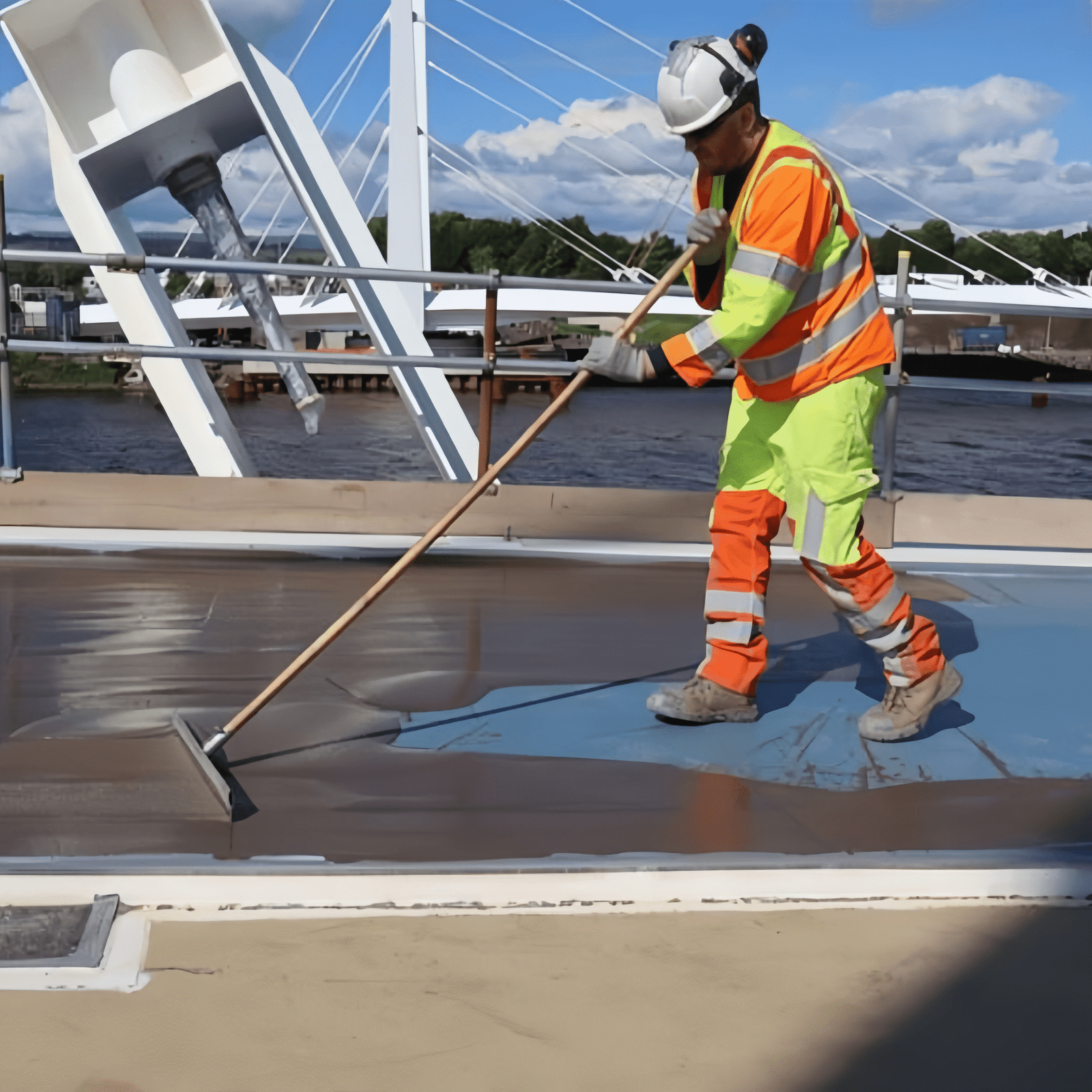
- Bridges & Infrastructure: Concrete bridges and tunnels. Seals against moisture and deicing salts, extending structural lifespan.
How to Choose the Right Polyurethane Waterproof Coating
Selecting the right polyurethane coating depends on project type, surface material, environmental conditions, and performance needs. Here’s a guide to help you decide:
1. One-Component vs. Two-Component
- One-Component: Best for DIY projects, small areas (e.g., bathroom floors, small decks), and interior surfaces. Easy to apply, moisture-curing, and low-odor. Ideal for surfaces with minimal movement.
- Two-Component: Recommended for commercial/industrial projects, high-traffic areas (e.g., parking garages, factory floors), and exterior surfaces exposed to harsh conditions. Offers superior durability, chemical resistance, and adhesion. Requires precise mixing and faster application (before curing starts).
2. Interior vs. Exterior Use
Choose a coating formulated for your project’s environment: Exterior: Opt for UV-resistant polyurethane coatings to prevent degradation from sunlight. Look for products labeled “exterior-grade” or “UV-stable.”Interior: Prioritize low-VOC or zero-VOC formulations for spaces with limited ventilation (e.g., basements, bedrooms). Ensure the coating is mold-resistant for high-humidity areas like bathrooms.
3. Surface Type
Match the coating to your surface: Concrete/Wood: Most polyurethane coatings adhere well to these surfaces, but ensure the surface is clean, dry, and primed (if needed) for optimal adhesion.Metal: Use a polyurethane coating designed for metal surfaces, or apply a metal primer first to enhance adhesion and prevent rust.Asphalt: Choose a flexible polyurethane coating that can accommodate asphalt’s natural movement and cracking.
4. Performance Requirements
Consider the specific demands of your project: Chemical Resistance: For industrial or garage floors, select a two-component polyurethane with high chemical resistance to oils, solvents, and acids.Slip Resistance: For pool decks, showers, or outdoor patios, choose a textured polyurethane coating or add anti-slip additives during application.Flexibility: For surfaces prone to movement (e.g., rooftops, bridges), prioritize a high-elasticity polyurethane coating.
Application Tips for Optimal Results
Proper application is critical to maximizing the performance of polyurethane waterproof coating. Follow these steps for best results:
- Surface Preparation: Clean the surface thoroughly to remove dust, dirt, oil, grease, and old coatings. Use a pressure washer (for exterior surfaces) or a stiff brush and mild detergent (for interiors). Repair cracks, holes, or uneven areas with a compatible patching compound. Ensure the surface is completely dry—moisture can cause bubbling or adhesion issues. For porous surfaces (like concrete), apply a primer to enhance adhesion and seal pores.
- Mix (If Applicable): For two-component coatings, mix the base resin and curing agent in the exact ratio specified by the manufacturer. Use a drill mixer for uniform blending and work quickly, as the mixture will start curing within a limited time (pot life).
- Apply Evenly: Use a high-quality brush, roller, or sprayer to apply thin, uniform coats. Avoid over-application, as this can cause sagging, bubbling, or uneven curing. For optimal waterproofing, apply at least two coats, with the second coat applied perpendicular to the first to ensure full coverage.
- Allow Proper Drying & Curing: Follow the manufacturer’s instructions for drying time between coats (typically 4-8 hours for one-component, 6-12 hours for two-component). Allow the final coat to cure fully before subjecting the surface to water, traffic, or heavy use—full curing can take 24-72 hours, depending on temperature and humidity.
- Post-Application Care: Keep the surface clean and free of debris during curing. Avoid exposure to rain, snow, or standing water until fully cured. For exterior surfaces, reapply a topcoat every 5-7 years to maintain UV protection and durability.
Common Application Mistakes to Avoid
Steer clear of these errors to ensure a successful waterproofing project:
- Applying to Damp Surfaces: Moisture trapped under the coating causes bubbling, peeling, and mold growth. Always ensure surfaces are completely dry before application—use a moisture meter for concrete or wood to confirm humidity levels are within the manufacturer’s recommended range.
- Incorrect Mixing of Two-Component Coatings: Failing to mix the base resin and curing agent in the exact ratio specified leads to incomplete curing, poor durability, and compromised waterproofing. Use calibrated tools for mixing and blend thoroughly to avoid streaks or unreacted components.
- Ignoring Weather Conditions for Exterior Applications: Applying polyurethane waterproof coating in extreme temperatures (below 50°F/10°C or above 90°F/32°C) or high humidity disrupts drying and curing. Avoid application during rain, dew, or strong winds, which can contaminate the wet coating.