
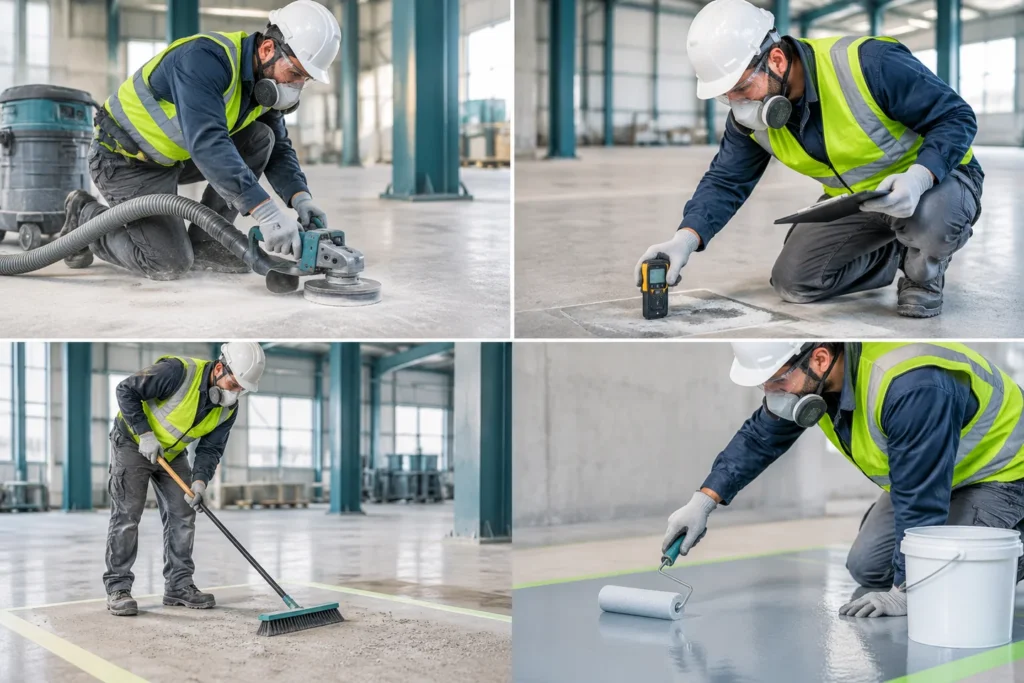
Most premature coating failures begin at the interface with the substrate. Inspect moisture, strength, contamination and existing coatings; create the required cleanliness and profile; complete repairs; then select a primer compatible with both the surface and the next layer.
A premium topcoat cannot compensate for dust, oil, moisture, weak concrete, loose rust or an incompatible existing finish. Surface preparation is part of the coating system, not a separate optional activity.
Inspect before specifying
Record substrate type, age, strength, moisture, porosity, contamination, cracks, salts, rust and previous coatings. Adhesion tests, moisture checks or trial areas may be appropriate for uncertain surfaces.
Concrete preparation
Remove laitance, curing compounds, oil, weak material and old coatings. Grinding or shot blasting can create a sound, open surface. Repair cracks and defects according to their cause. Moisture vapor may require a special system rather than a standard primer.
Steel preparation
Degrease, remove salts, rust and mill scale, and create the profile required by the primer. Protect cleaned steel from flash rust and coat within the specified window.
Masonry and plaster
Allow adequate curing, check alkalinity, repair cracks and remove powdering or efflorescence. A suitable sealer can control absorption, but unstable plaster must first be corrected.
Wood and panel substrates
Control moisture, sand consistently, remove dust and address knots, resin or pores. Select a sealer or primer around the wood species and final clear or pigmented system.
How to choose a primer
- Compatibility with substrate and topcoat
- Penetration or barrier requirement
- Moisture and chemical exposure
- Application method and pot life
- Recoat interval and curing conditions
- Required adhesion and film thickness
Document the preparation standard, tools, primer consumption, environmental conditions and inspection method. These records help diagnose performance and support repeat projects.
Common preparation failures
Coating can fail when dust remains after grinding, soluble salts stay on steel, moisture is trapped below an impermeable film, or a hard glossy old finish is recoated without testing. Another common error is allowing a prepared surface to become dirty or oxidized before primer application.
Trial areas reduce project risk
A small representative trial can confirm preparation method, primer wetting, adhesion, appearance and application rate. It is especially valuable on old floors, unknown coatings, highly porous walls and contaminated industrial surfaces. Record the trial location and curing time before evaluation.
Jobsite quality checklist
- Substrate is sound, dry enough and free of contaminants
- Required cleanliness and profile are achieved
- Repairs and joints follow the project design
- Primer is mixed, diluted and applied within instructions
- Coverage, temperature and recoat interval are recorded
- Adhesion or other agreed checks are completed
These controls create a traceable link between the written specification and actual coating performance.
Questions related to this coating topic.
Is primer always necessary?+
Not every product requires a separate primer, but the decision must be based on substrate condition, coating chemistry and the approved specification.
Can primer fix damp concrete?+
A standard primer cannot solve uncontrolled moisture. Measure the condition and select a moisture-tolerant or vapor-control route when appropriate.
What causes coating delamination?+
Common causes include contamination, moisture, weak substrate, inadequate profile, missed recoat window and incompatible layers.