Blog
Can Heat Reflective Coating Really Lower Electricity Bills in Commercial Buildings?

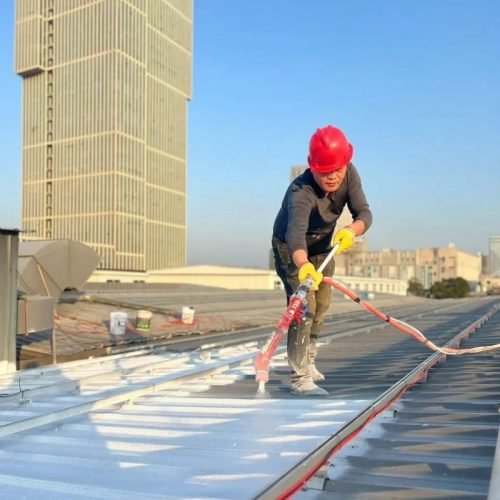
For factory owners, logistics managers, and commercial property developers, summer often brings a familiar financial challenge: soaring electricity costs. Large facilities, particularly those with expansive corrugated iron roofs or flat concrete surfaces, absorb significant amounts of solar energy throughout the day.
Due to the heat-retaining characteristics of concrete and metal, these roofs function like enormous thermal batteries. They capture daytime heat and continue to release it into the building long after sunset, forcing your air conditioning to operate at full capacity around the clock.
In your quest to mitigate this issue, you may have come across passive cooling technology that utilizes a heat reflective coating (commonly referred to as cool roof paint or solar reflective paint). However, as a business operator, you seek the straightforward, data-driven truth: Does it genuinely reduce your energy expenses? Or is it merely a marketing gimmick?
Let’s bypass the overly complicated physics and examine how this technology effectively lowers energy consumption in buildings while enhancing indoor thermal comfort without incurring excessive costs.
The Fundamental Reality: Its Impact on Energy Use in Buildings
A typical dark or unpainted roof can absorb as much as 90% of solar heat from the sun. On a scorching summer afternoon, the temperature of your roof can soar to an extreme 75°C to 85°C. This heat is then transferred directly through the ceiling, compelling your HVAC systems to struggle against the heat.
A high-quality heat-reflective coating addresses this issue by transforming your roof into a massive solar mirror:
- Elevated Solar Reflectance: Rather than absorbing heat, the bright white surface and hollow ceramic microspheres reflect up to 85% of sunlight back into the atmosphere before it can enter your building.
- Enhanced Thermal Emittance: It stops heat from accumulating. Any minimal ambient warmth that is absorbed is swiftly released back into the environment.
By blocking heat at the outermost layer of the building envelope, you significantly lower air conditioning power consumption. Your air conditioning units will not have to exert as much effort to keep a consistent and comfortable indoor environment.
The ROI: How Much Can You Truly Save on Your Energy Bills?
Based on industrial case studies and energy simulation data from the global coating industry, the financial benefits of installing a cool roof are clearly quantifiable:
Roof Surface Temperature Reduction: A cool roof can lower the surface temperature of metal or concrete roofs by 15°C to 25°C.
- HVAC Cost Savings: By mitigating the "oven effect" from the ceiling, commercial HVAC electricity usage can decrease by 20% to 35% during the hottest summer months.
- Prolonged Equipment Lifespan: Industrial AC chillers represent significant capital expenditures. A cooler roof prevents your AC units from short-cycling or operating under excessive pressure, which reduces your monthly utility costs and extends the lifespan of your costly cooling systems.
In addition to financial savings, there is a significant improvement in indoor thermal comfort. For spaces without air conditioning, such as manufacturing lines or warehouses for heavy goods, applying this coating can lower the internal ambient air temperature by 3°C to 6°C, fostering a safer and more productive environment for employees.
Choosing the Appropriate System for Your Roof Substrate
To achieve significant energy savings, it is essential to select a system that is compatible with your specific roof substrate. Using an unsuitable product can result in issues such as cracking, peeling, and material waste.
For Corrugated Metal Roofs (Factories & Metal Warehouses)
Metal heats up quickly and expands considerably during the daytime.
- The Solution: A flexible waterproof coating with high elasticity is required. The coating must be able to stretch in tandem with the metal as it expands and contracts, without developing cracks.
- The Rule: Treatment for rust is crucial. It is necessary to apply a specialized anti-rust primer before applying your solar reflective topcoat.
For Flat Concrete Roofs (Commercial Plazas, Offices, & Depots)
Concrete is porous, highly alkaline, and known for retaining heat well into the night.
- The Solution: A high-build elastomeric cooling system that also serves as a waterproof barrier.
Due to the tendency of concrete to experience significant micro-cracking and moisture entrapment, always prepare the surface with a deep-penetrating Concrete Bonding Adhesive first. This process seals the concrete pores, balances the pH, and securely adheres the heat-reflective topcoat to the slab, preventing blistering or peeling under intense sunlight.
The Long-Term Advantage: The Importance of Self-Cleaning for Solar Reflectance
Here’s an essential insider tip: A heat-reflective paint is only cost-effective if it remains clean.
In heavily industrialized areas, roofs tend to accumulate dust, pollution, and grime rapidly. If you opt for a low-quality, sticky paint from retail, it will likely become gray or brown within a year. Once a reflective roof darkens, its capacity to reflect sunlight diminishes by 50%, leading to an increase in your electricity bills.
When selecting coatings for a commercial project, always inquire about a system designed with cross-linking and self-cleaning features. This results in a smooth, low-tack surface that prevents dust and pollution from adhering. When it rains, the water effectively washes away the dirt, keeping the roof bright white and ensuring your energy-saving return on investment for 10 to 15 years.
Direct Factory Sourcing for High-Volume Commercial Tenders
Are you bidding on a large-scale industrial cool-roof project or seeking to introduce a high-margin product line to your distribution catalog? Relying on local retail store buckets can become costly and may not provide the volume consistency required for commercial compliance.
With 20 years of manufacturing expertise, we operate from a cutting-edge 7,000-square-meter facility, supplying integrated, high-performance coating systems. We offer global trading partners and engineering contractors complete layered systems, including deep-penetrating concrete bonding adhesives and certified, high-reflectance topcoats, all accompanied by comprehensive MSDS and CE safety data sheets. Our extensive OEM/ODM capabilities allow us to customize colors, textures, and drying times to align perfectly with your regional climate and project specifications.
Are you looking to safeguard your building, enhance worker comfort, and significantly reduce your energy expenses? Reach out to our foreign trade engineering team today for detailed technical specifications, competitive bulk wholesale pricing, and complimentary factory custom sample matching.