Blog
How Do You Choose the Best Garage Floor Paint for Underground Parking?

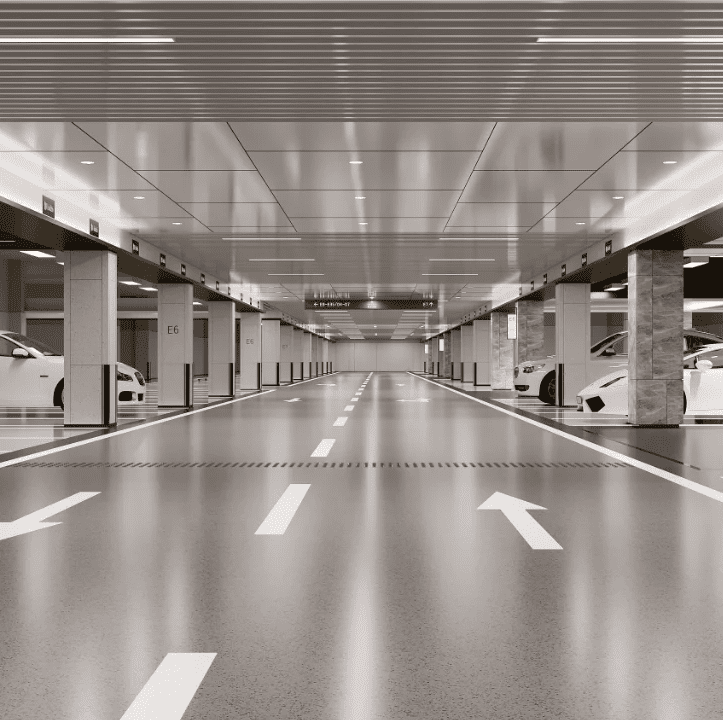
For commercial contractors and property developers, selecting the appropriate garage floor paint for subterranean or underground parking facilities is a critical decision. Underground garages endure severe conditions that residential garages do not face: persistent hydrostatic moisture pressure from the surrounding soil, substantial vehicular traffic, oil spills, and the notorious "hot-tire pickup" phenomenon (where heated tires can literally detach the coating from the concrete).
Utilizing a low-cost, single-component retail paint will result in bubbling, cracking, and peeling of the floor within six months, which can lead to expensive warranty claims and dissatisfied clients.
As a factory with 20 years of experience specializing in heavy-duty resin systems, we have developed this technical guide to assist contractors in selecting the appropriate system, comprehending the underlying chemistry, and adhering to a reliable application standard operating procedure.
What Causes Peeling of Underground Garage Floors?
To select the appropriate coating, it is essential to comprehend the two main factors that lead to the failure of underground garage floor coating systems:
Subterranean Moisture Vapor (Hydrostatic Pressure)
Underground concrete slabs are situated beneath the water table. Moisture from the surrounding soil persistently attempts to rise through the porous concrete. If the surface is sealed with a non-breathable, impermeable coating, the trapped water vapor generates significant pressure. Over time, this pressure will cause the paint to lift, resulting in blisters that eventually burst and crack.
Hot-Tire Pickup and Shear Stress
When a vehicle enters a parking garage, its tires are heated due to friction with the road. As the tires cool, the rubber contracts and adheres to the floor coating. When the vehicle departs, this adhesive force, along with the weight of the car, can shear off a weak paint layer from the concrete substrate.
Selecting the Appropriate System: Water-Based Epoxy vs. Solid Systems
When preparing a bid for an underground garage project, you will typically have to choose between two professional-grade options based on the budget and ventilation requirements:
Option A: Professional Water-Based Epoxy Garage Floor Paint
This option is the most favored for large, multi-level underground parking facilities.
- The Advantage: Water-based epoxies are "breathable," allowing small amounts of moisture vapor from the ground to escape through the film without causing bubbles in the paint. Additionally, they feature Zero/Low VOCs and no strong odors, enabling application in enclosed underground areas without overwhelming your application team.
- Best For: Public parking areas, garages in apartment buildings, and slabs with minor moisture concerns.
Option B: 100% Solids Industrial Floor Coating + Polyaspartic Topcoat
This is the robust, premium option for upscale commercial properties or heavy-load ramps.
- The Advantage: It creates a thick, protective plastic layer (typically 10–20 mils thick). With no water content, it cures through chemical cross-linking, providing exceptional resistance to chemicals, brake fluids, and industrial wear.
- Best For: High-traffic drive lanes, garage entry ramps, and zones designated for heavy vehicles.
The 4-Step Technical Protocol for Zero-Failure Garage Installation
To guarantee that your underground garage floor paint project endures for over 15 years without peeling, your team must adhere to this rigorous industrial Standard Operating Procedure (SOP):
Step 1: Mechanical Profiling & Moisture Testing
Avoid relying on acid etching in a confined underground garage due to the hazardous fumes and insufficient pore opening. Instead, utilize a planetary diamond grinder to shot-blast the concrete to achieve a CSP 2 or CSP 3 profile, which should feel similar to medium-grit sandpaper.
- The Test: Always perform a calcium chloride moisture test. If the concrete releases more than 3 lbs of moisture per 1,000 sq. ft., standard coatings cannot be applied directly.
Step 2: The Core Insurance: Anti-Alkali Priming & Moisture Barriers
This step distinguishes professionals from amateurs. In an underground environment, the primer is responsible for 90% of the essential work.
If the garage slab exhibits elevated moisture levels, it is crucial to apply a high-penetration, moisture-mitigating primer such as our factory's heavy-duty Concrete Bonding Adhesive. This primer penetrates deeply, chemically bonding with damp concrete and preventing hydrostatic pressure from compromising your finish coat.
Step 3: Applying the Body Coat in Cross-Hatch Layers
Begin by mixing your two-part epoxy garage floor paint with a low-speed mechanical paddle mixer for 3 to 5 minutes. Pour the blended resin in ribbons across the floor and utilize a 3/8-inch lint-free roller to distribute it evenly. Work in sections of 10x10 ft, employing a "W" or "M" cross-hatch technique to guarantee consistent thickness and eliminate any thin areas.
Step 4: The High-Traffic Non-Slip Topcoat
An underground garage can become extremely slippery when vehicles bring in rainwater or snow. To mitigate slip-and-fall risks:
Sprinkle anti-slip aggregates (such as silica sand or quartz) into the wet body coat.
After it dries, remove the excess sand and apply a robust, clear polyurethane or polyaspartic topcoat.
To ensure maximum tire resistance and UV protection at garage entrances, complete the system with our factory's high-wear Clear Industrial Polyurethane Topcoat to effectively prevent tire marks.
Why Buy Commercial Garage Systems Directly from Our 20-Year Factory?
For large-scale commercial underground garage tenders, purchasing retail DIY floor kits is a surefire way to fail. Extensive projects necessitate high-volume chemical uniformity, precise cost-per-square-meter management, and robust certifications.
From our 7,000-square-meter manufacturing facility, we deliver fully integrated, certified coating systems to international contracting teams. Our offerings include the complete layered package, featuring deep-penetrating concrete bonding adhesives, anti-alkali primers, and heavy-duty industrial garage floor paints, all accompanied by full CE and MSDS safety data sheets. We provide extensive OEM/ODM customization options, enabling you to tailor colors, cure times for various climates, and texture densities to secure your next local government or commercial contract.
Are you preparing to bid on an upcoming commercial or residential garage project? Reach out to our foreign trade engineering team today for bulk wholesale pricing, custom formulation assistance, and direct factory sample kits.