Blog
Is Epoxy Color Sand Flooring Paint Any Good?

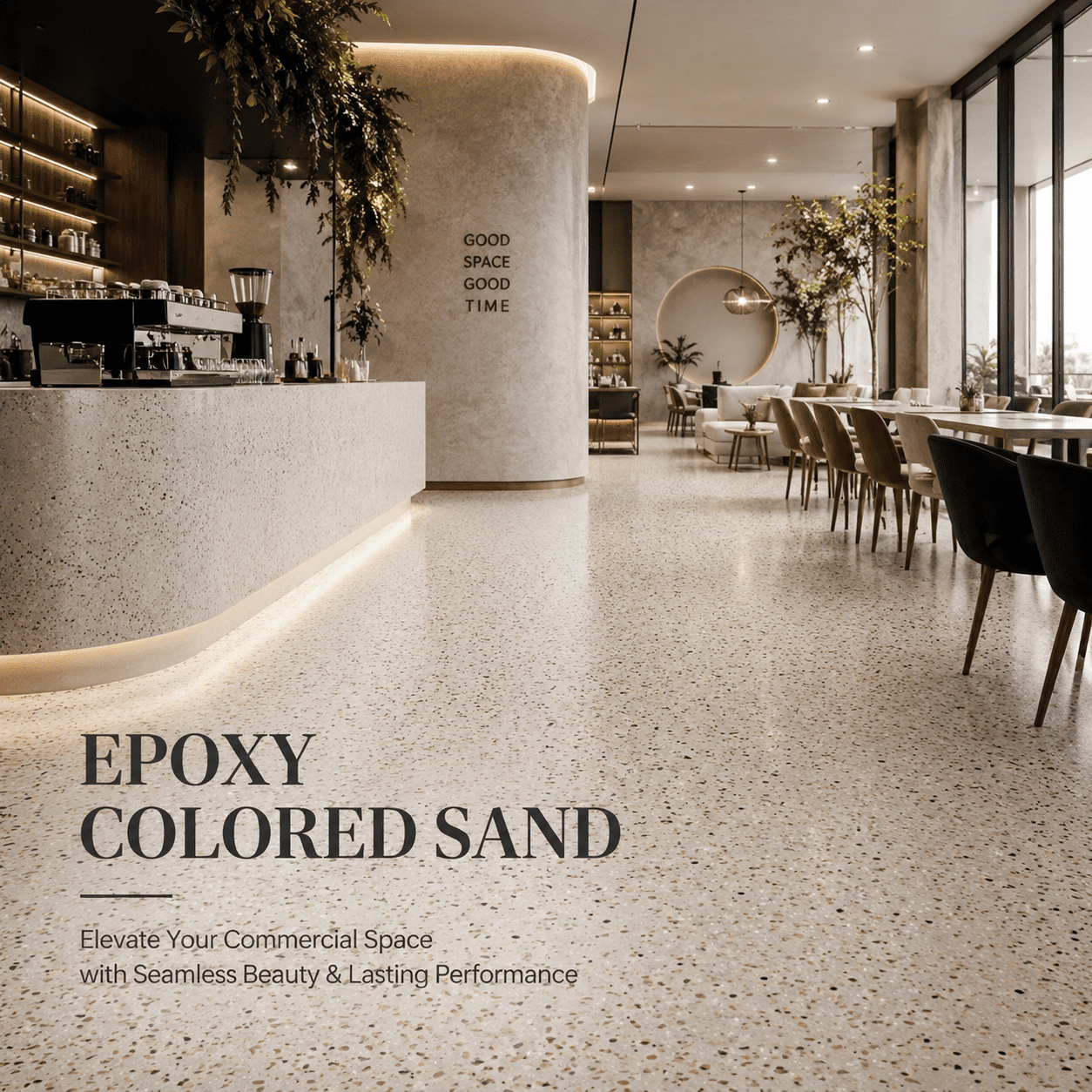
For commercial flooring contractors, each project represents a critical equilibrium between aesthetic appeal and long-lasting durability. When clients request a seamless finish capable of enduring forklift traffic, significant impact, or frequent chemical washdowns, conventional coatings frequently prove inadequate.
Recently, a predominant question has emerged in B2B procurement discussions: Is epoxy sand floor paint effective, or is it merely a fleeting trend?
The concise response is that quartz/colored sand epoxy systems are regarded as the gold standard for robust commercial settings. Nevertheless, they necessitate a fundamentally different methodology compared to standard roll-on coatings.
This guide elucidates the essential distinctions between epoxy color sand and traditional epoxy flooring, addresses the most frequently searched contractor inquiries on the web, and offers a comprehensive application standard operating procedure (SOP) to prevent expensive callbacks.
Epoxy Color Sand vs. Traditional Epoxy Flooring: What’s the Difference?
To clarify the distinctions for your clients, it is essential to look beyond the superficial aspects and concentrate on molecular density and aggregate reinforcement.
- Traditional Epoxy Flooring: This type is generally applied as a self-leveling or neat roller coat. Although it initially presents a sleek appearance, it forms a thin, uniform plastic-like layer. When subjected to heavy loads or the dragging of pallets, traditional epoxy is particularly vulnerable to gouging, scratching, and can become exceedingly slippery when wet.
- Epoxy Color Sand Flooring: Commonly referred to as quartz epoxy, this system combines high-clarity liquid epoxy resin with multi-colored, rounded quartz sand aggregates. Rather than creating a thin film, the sand contributes to a reinforced, structural mortar framework. This flooring solution provides exceptional compressive strength, inherent slip resistance, and effectively conceals substrate imperfections.
Why is Water-Based Epoxy Color Sand Popular for Hotel Lobbies and Commercial Spaces?
We are witnessing a significant increase in contractors opting for water-based quartz systems in hospitality and retail settings. The motivations are strictly operational:
- Zero VOCs & Odorless Curing: Conventional solvent-based epoxies release strong chemical fumes that can disrupt nearby businesses. In contrast, water-based color sand systems cure without toxic odors, facilitating "live-site" renovations in hotels, hospitals, and restaurants without inconveniencing guests or staff.
- The Marble-Alternative Aesthetic: When expertly troweled and sealed, color sand replicates the luxurious granular appearance of natural granite or terrazzo at a considerably lower installation cost and weight.
- Breathability: Water-based systems exhibit a higher moisture vapor transmission rate. If a hotel lobby slab is poured on grade without an ideal vapor barrier, a water-based system is less prone to blistering from minor capillary moisture.
The Structural Backbone: The Role of Primer and Topcoat in Quartz Systems
The effectiveness of an epoxy color sand system is largely influenced by its layered structure. Treating it as a single-step mixture can result in severe consequences.
The Primer: Preventing the "Dry-Out" Effect
Quartz sand is characterized by its high porosity. When color sand is applied directly onto unprimed concrete, the dry concrete slab absorbs the liquid epoxy resin from the sand matrix. This leads to the sand becoming undersaturated, brittle, and prone to crumbling. A high-bonding, low-viscosity primer effectively seals the pores of the concrete, ensuring that 100% of the body-coat resin remains integrated with the quartz.
The Topcoat: Locking the Matrix
The topcoat, typically a water-clear epoxy, polyurethane, or polyaspartic sealer, serves two critical purposes for contractors:
- Cleanability vs. Slip Resistance: By adjusting the thickness of the clear topcoat, one can control the texture. A single thin coat results in a rough, high-grip anti-slip profile, which is particularly suitable for commercial kitchens. In contrast, a double coat yields a smooth, easily moppable, sanitary surface, ideal for pharmaceutical facilities or showrooms.
- UV Stability: Conventional epoxy often yellows when exposed to UV light. A professional system integrates a quartz base with an aliphatic topcoat to prevent the colored sand from developing an amber hue near windows or entryways.
How to Apply Epoxy Color Sand Flooring: The Factory SOP
There are two main techniques for implementing quartz systems: the Broadcast Method, which involves sanding excessively into a wet binder, and the Trowel Mortar Method, where resin and sand are pre-mixed into a mortar paste. To achieve optimal structural thickness, adhere to the following professional Trowel/Broadcast Standard Operating Procedure (SOP):
Step 1: Substrate Mechanical Profiling
Avoid acid etching. For commercial quartz applications, a mechanical bond profile of CSP 3 is required. Utilize diamond grinding or shot blasting on the concrete to eliminate all laitance, curing compounds, and residual oils. Repair all active cracks using a rigid structural epoxy paste.
Step 2: The Tack-Coat Primer
Evenly apply your low-viscosity primer according to the coverage rate recommended by the manufacturer. Once the primer remains sticky or 'tacky,' you can proceed to add the sand layer to facilitate optimal chemical cross-linking.
Step 3: Mixing and Screeding the Color Sand
Thoroughly mix your clear epoxy Part A and Part B using a low-speed mechanical mixer.
Gradually incorporate the colored quartz sand into the resin binder. The typical ratio is 1 part resin to 4–6 parts sand by weight, achieving a 'damp-sand' consistency.
Utilize a cam rake to spread the mixture to your desired thickness (generally between 1/8 inch and 1/4 inch), then use a tight trowel, either mechanically or by hand, to compact the quartz matrix smoothly.
Step 4: Grout Coat and Clear Topcoat
After the sand matrix has sufficiently cured to allow foot traffic (typically within 12 to 24 hours), remove any loose aggregates by sweeping or vacuuming. Next, apply a clear epoxy grout coat to fill the tiny air voids present between the sand grains, and then finish with a durable, scratch-resistant polyaspartic or polyurethane topcoat.
Troubleshooting: What Causes Epoxy Sand Floors to Peel or Crack?
When a quartz floor fails, contractors incur losses due to labor-intensive tear-outs. To prevent this, avoid these three frequent mistakes:
- Hydrostatic Pressure (Moisture Delamination): Applying a dense quartz matrix over a concrete slab with a high moisture emission rate (exceeding 3 lbs/1,000 sq. ft./24 hours) can trap water vapor beneath the impermeable resin. This pressure can cause the epoxy to detach from the concrete. The Solution: Always conduct a calcium chloride test. If moisture levels are elevated, use a specialized moisture vapor barrier primer prior to applying the sand matrix.
- Starved Resin Matrix (Under-saturation): Attempting to cut costs by incorporating excessive sand into insufficient resin leads to a dry mix. Although the floor may initially appear complete, the sand grains will become dislodged under the weight of forklift tires, resulting in pitting, cracking, and erosion of the floor.
- Improper Joint Treatment: Concrete expansion joints are intended to accommodate movement. If epoxy color sand is troweled directly over an expansion joint without proper consideration, the shifting slab will cause cracks in your seamless floor within a few months. The Solution: After installation, cut out the joints and fill them with a flexible polyurea joint filler.
Partner Directly with a 20-Year B2B Source Factory
At our 7,000 sqm manufacturing facility, we develop high-quality epoxy color sand floor paint systems that are specifically designed to meet the rigorous requirements of commercial installation teams. We do not merely provide standard retail buckets; instead, we offer contractors comprehensive chemical systems that have been field-tested, including specialized anti-alkali primers, high-purity colored quartz aggregates, and ultra-clear, high-traffic topcoats.
We provide complete OEM/ODM customization, custom color blending to align with architectural specifications, and full ISO/A+/CE compliance certifications to facilitate your project bidding process.
Are you aiming to reduce material markup and obtain dependable, industrial-grade quartz systems for your upcoming commercial tender? Reach out to our foreign trade engineering division today for technical data sheets, bulk wholesale pricing, and direct factory sample matching.