Blog
How to Choose the Right Waterproof Coating for Flat Concrete Roofs

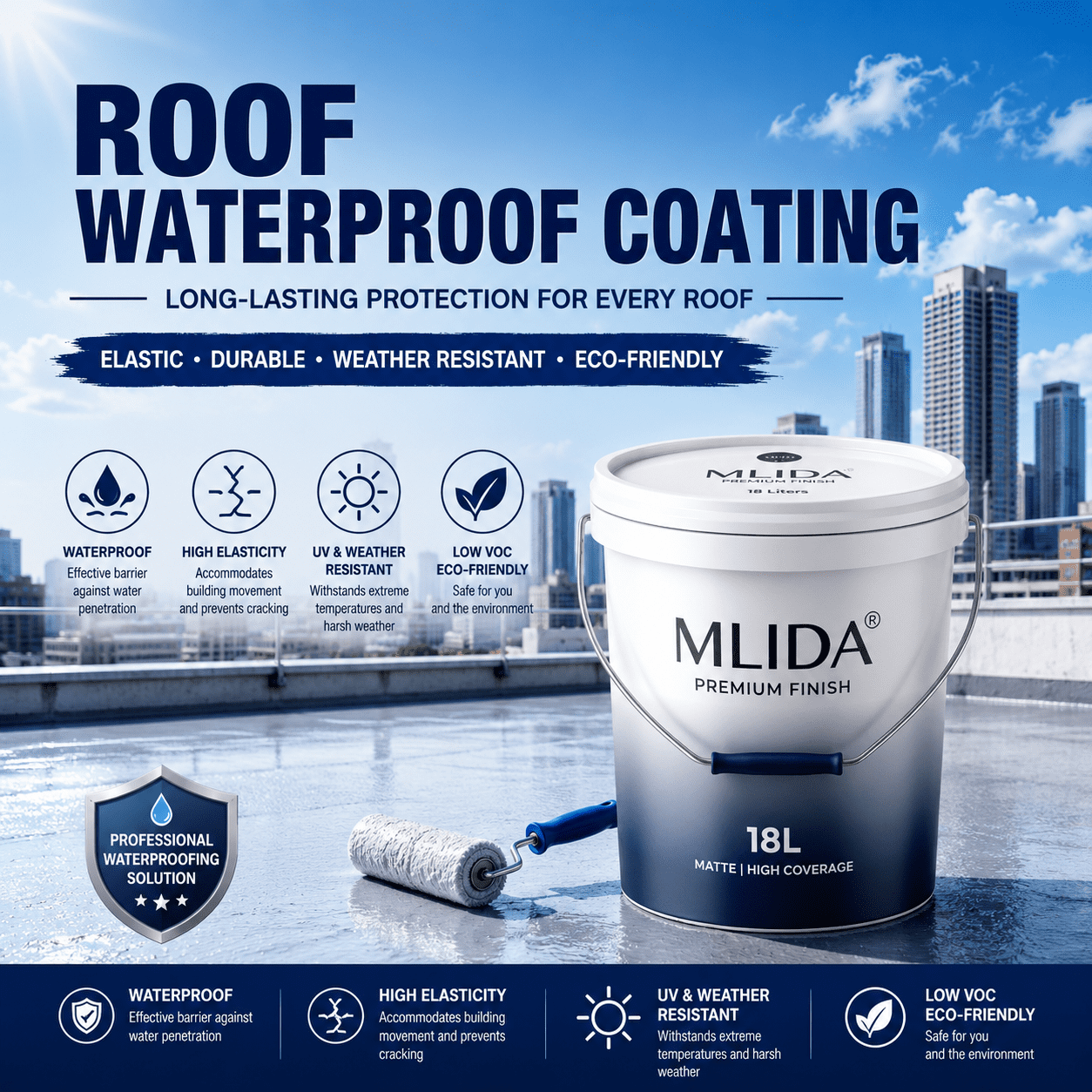
Flat concrete roofs are essential features in contemporary commercial structures, minimalist residential homes, and industrial storage facilities. Nevertheless, from an engineering perspective, flat roofs represent the most susceptible structural components. In contrast to sloped roofs that quickly drain water, flat roofs are at risk of water accumulation (ponding), structural shifts, and constant UV damage.
For roofing contractors, property developers, or B2B building materials suppliers, choosing an inappropriate system can result in underground leaks, concrete deterioration (rebar rust), and costly structural repairs.
What’s the modern answer? Fluid-applied membranes. However, with numerous choices available, how can you determine the best waterproof coating for flat concrete roofs?
Let’s examine the technical selection criteria, evaluate the top engineering systems, and review the application guidelines to guarantee a leak-free outcome.
The Core Challenge of Flat Concrete Roofs
Before selecting a bucket of paint, it is essential to comprehend the reasons behind the failure of flat concrete roofs. Concrete is inherently porous and subject to movement. It expands when exposed to the heat of the afternoon sun and contracts during the cooler nights. This cycle of thermal expansion and contraction leads to the formation of tiny hairline cracks.
If your waterproof coating does not have the necessary elasticity to accommodate these moving cracks, it will break, tear, and permit water to infiltrate the building envelope. Consequently, any roof coating you choose must have three essential characteristics:
- High Elongation (Flexibility): The capacity to stretch without tearing.
- Ponding Water Resistance: The capability to endure submersion under standing water for extended periods without undergoing chemical breakdown.
- UV Stability: The ability to reflect solar radiation without becoming brittle or chalky.
Comparing the Top 3 Waterproofing Systems for Flat Roofs
Drawing from two decades of manufacturing expertise, we classify high-performance liquid-applied membranes into three main engineering options. Each option offers distinct advantages based on your project's budget and environmental conditions:
System A: Liquid Rubber Waterproof Coating (The Ultimate Roof Skin)
For flat concrete roofs that undergo significant thermal movement or slight structural settling, a liquid rubber waterproof coating, typically made from advanced polyurethane or modified elastomeric bitumen, is highly recommended in the industry.
- Why It Works: This coating acts as a seamless, rubberized layer over the concrete surface. High-quality liquid rubber formulations provide exceptional elongation capabilities, often stretching between 500% and 600%.
- Best For: Ideal for commercial flat roofs, restoration of older roofs, and areas that experience drastic temperature fluctuations from day to night.
- Contractor Tip: Liquid rubber is more adept at accommodating structural shifts than most other materials. However, it is crucial to use a UV-stable topcoat (such as an aliphatic polyurethane) to safeguard the rubber polymers against severe solar degradation.
System B: Flexible Waterproof Coating (The Cementitious Hybrid)
A polymer-modified flexible waterproof coating merges advanced liquid acrylic resins with a robust blend of cementitious powder.
- Why It Works: This coating establishes an exceptional mechanical and chemical bond with the concrete substrate due to their shared mineral base structures. It effectively manages positive hydrostatic water pressure and will not delaminate, even if the concrete is damp during application.
- Best For: Ideal for flat roofs that will later be topped with gravel, insulation boards, or roof tiles (inverted roofs), as well as rooftop gardens and concrete balconies.
- Contractor Tip: Although it offers excellent chemical resistance, cementitious systems exhibit lower elongation compared to pure liquid rubber, so it is advisable to reinforce high-movement joints with mesh.
System C: Pure Acrylic Solar-Reflective Membranes (The Cool Roof Solution)
High-build acrylic liquid-applied membranes consist of watery emulsions infused with solar-reflective titanium dioxide pigments.
- Why It Works: This coating functions as a "Cool Roof" solution, capable of reflecting up to 85% of solar heat, which helps to lower the internal temperature of the concrete slab and significantly reduces HVAC electricity expenses for the building.
- Best For: Ideal for maintenance overcoating on existing stable roofs located in tropical, high-sun areas.
- Contractor Tip: While acrylics are very cost-effective, they do not perform well under prolonged ponding water conditions. It is essential to ensure that the roof has an adequate slope (at least a 1:50 fall) directing water toward the drainage outlets before recommending acrylics.
The 4-Step Technical Protocol for Flat Roof Coating Success
The effectiveness of a waterproofing material largely depends on the preparation of the substrate. More than 90% of leaks in flat roofs occur at detail transitions and corners. Adhere to this factory SOP to prevent callbacks:
Step 1: Adjust the Slope & Fix Cracks
Before you begin using any flexible waterproof coating, inspect for low areas where water collects. Utilize a non-shrink polymer cement mortar to elevate these spots and guarantee proper drainage towards the scuppers. For any structural cracks wider than 1mm, clear out the debris, vacuum the area, and fill them with a high-performance polyurethane structural sealant.
Step 2: Apply a Deep-Penetrating Primer
Concrete tends to be very alkaline and dusty. If you apply a thick liquid membrane directly onto untreated concrete, it may deprive the coating of its resin binder.
Always start with a low-viscosity, anti-alkali primer or our Factory's Premium Concrete Bonding Adhesive. This will bind the dust, regulate the pH of the concrete, and establish a robust anchor for the waterproof layer.
Step 3: Strengthen the 90-Degree Detail Zones
The most vulnerable area of any flat roof is the intersection where the horizontal slab meets the vertical parapet wall (the 90-degree angle). Form a 45-degree angle "cove" or "cant strip" at the wall joints using mortar. Next, embed a non-woven polyester or fiberglass reinforcement mesh into the wet initial layer of your liquid rubber waterproof coating at all joints, corners, and pipe penetrations. This establishes a puncture-resistant framework.
Step 4: Cross-Hatch Multi-Coat Application
Avoid pouring the coating in a single thick puddle to expedite the process; this leads to mud-cracking. Instead, apply at least two heavy coats. Once the first coat is dry to the touch, apply the second coat at a perpendicular (90-degree cross-hatch angle) to the first. This ensures a complete millimeter film thickness with no pinholes.
Direct Factory Sourcing for Commercial Engineering Tenders
When bidding on extensive commercial roofing projects, airport terminals, or logistics warehouses, standard retail paints do not withstand industrial conditions.
Operating from our 7,000-square-meter manufacturing facility with two decades of dedicated R&D, we produce specialized chemical systems designed for structural durability. We assist global contractors and distributors with fully certified materials that meet A+ and CE compliance standards. From deep-penetrating concrete bonding adhesives to high-elongation liquid rubber waterproof coatings, we offer comprehensive, custom-formulated OEM/ODM solutions tailored to your local market conditions.
Are you looking to optimize your project material costs and secure proven roofing systems? Reach out to our foreign trade engineering team today for personalized technical data sheets, bulk wholesale pricing, and expedited sample matching.