For painting contractors, interior designers, and commercial property developers, the single biggest headache during final building handover is rarely the timeline; it is the smell.
Traditional wall paints emit high levels of Volatile Organic Compounds (VOCs) that linger for weeks. This toxic off-gassing delays occupancy for hospital wards, schools, hotels, and luxury apartments, leading to severe project penalties and client complaints. Meanwhile, exterior walls face relentless UV exposure, chalking, and heavy rains that ruin curb appeal within months.
Enter the modern architectural gold standard: Odorless Interior & Exterior Latex Wall Paint.
Whether you are managing a high-density apartment complex renovation or sourcing high-margin coatings for your regional distribution network, here is everything you need to know about what low-VOC latex paint is, how interior and exterior formulas differ, and how to apply it for maximum durability.
What Makes a Wall Paint Truly "Odorless"?
Many cheap retail paints use synthetic masking perfumes to disguise harsh chemical odors. True odorless latex paint relies on advanced polymer chemistry:
Ultra-Low VOC Formulations: By utilizing high-purity, water-borne acrylic emulsions, Volatile Organic Compounds are reduced to practically zero (well below international green building thresholds).
Zero Residual Solvents: Free from toxic formaldehyde, heavy metals, aromatic hydrocarbons, and harsh ammonia additives.
Rapid Off-Gassing: Rooms can be safely occupied within hours of application rather than weeks, making it the ideal solution for commercial refurbishments and live-site residential repaints.
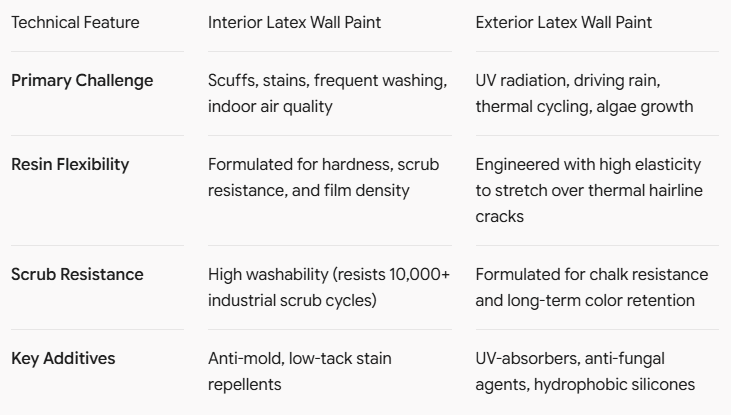
Interior vs. Exterior Latex Paint: The Technical Differences
While both formulations prioritize occupant health and smooth aesthetics, interior and exterior environments present fundamentally different engineering challenges:
The 3-Step Success SOP for Commercial Wall Application
Even the highest-grade odorless topcoat will peel or blister if applied over an improperly prepared substrate. Follow this strict three-step protocol on your job site:
Step 1: Substrate Mechanical Prep
Ensure the concrete, plaster, or drywall surface is completely dry (moisture level below 10%, pH level below 10), clean, and free from efflorescence, loose dust, or oil stains. Route out any structural cracks and fill them with a flexible masonry sealant.
Step 2: Seal with an Anti-Alkali Primer
Fresh concrete and masonry are highly alkaline. Applying latex topcoats directly onto unsealed masonry causes "alkali burning," turning light paint yellow and destroying topcoat adhesion.
Step 3: Apply Two Uniform Finish Coats
Apply two full coats of Odorless Latex Wall Paint using a roller, high-density brush, or airless spray equipment. Allow 2 to 4 hours of drying time between coats.
Direct Factory Sourcing for High-Volume B2B Supply
When bidding on large-scale government housing, commercial plazas, or international distribution tenders, buying retail store buckets ruins your profit margins and lacks long-term chemical consistency.
Operating from our 7,000-square-meter manufacturing plant with 20 years of intensive R&D, we produce premium low-VOC odorless latex paints engineered for long-term structural beauty. We support contractors, wholesalers, and private-label brands across global markets with certified products backed by complete MSDS and CE compliance. From high-build alkali-resistant primers to scrub-resistant interior topcoats, we offer full OEM/ODM customization for custom colors, sheen levels, and regional climate needs.