Blog
Seamless, Flexible, and Tough: Everything You Need to Know About High-Elastic Liquid Rubber Waterproofing

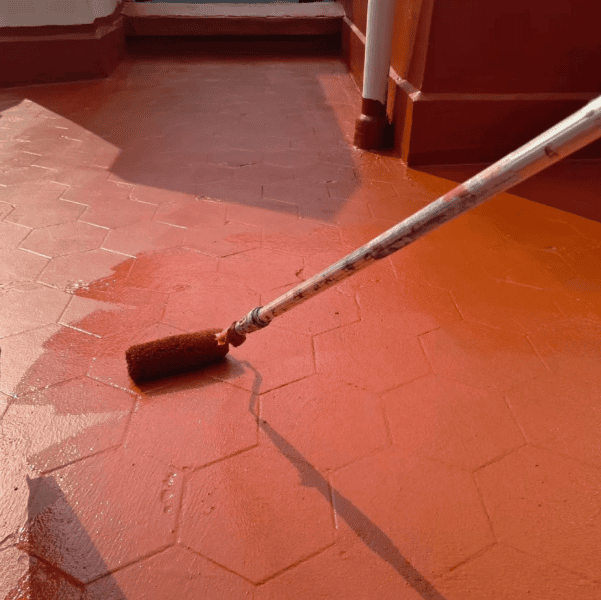
When it comes to building protection, water is a silent predator. It sneaks into microscopic concrete cracks, rusts structural rebar, destroys interior insulation, and leaves property owners with massive repair bills.
Traditional waterproofing methods, like smelly hot asphalt or rigid plastic sheets with glued seams, often fail over time. Why? Because glued seams eventually peel, and rigid materials snap when a building naturally settles or expands in the heat.
Enter the modern gold standard of structural protection: High-Elastic Liquid Rubber Waterproofing.
Whether you are a roofing contractor, a commercial developer, or a B2B building materials distributor, here is everything you need to know about what liquid rubber is, where to use it, its standout advantages, and how to apply it like a pro.
What Exactly is High-Elastic Liquid Rubber?
Think of it as liquid armor for buildings. When sprayed or rolled onto a surface, it cures into a continuous, joint‑free, rubberized membrane that can stretch like a rubber band, often achieving over 500% to 800% elongation without tearing. Thanks to its high elasticity, it can accommodate substrate cracking and building thermal expansion and contraction, and features self‑healing performance against minor punctures. It bonds firmly to concrete, metal and old roofing substrates, and can be applied on damp yet non‑ponding surfaces. This product is widely used for roof refurbishment, terraces, balconies, metal roofing, garage top slabs and tunnel waterproofing projects.
Key Advantages: Why Contractors and Engineers Love It
Why is the global construction industry shifting away from traditional sheet membranes toward liquid rubber? It boils down to four major engineering advantages:
- 100% Seamless Protection: Over 90% of structural leaks happen at glued seams and joints. Liquid rubber cures into one continuous monolithic sheet across the entire roof or foundation, completely eliminating seam failures.
- Extreme Elasticity & Crack-Bridging: Buildings move. They expand under the blazing afternoon sun and contract at night. Liquid rubber stretches and shrinks with the substrate, easily bridging new hairline cracks that form in the concrete underneath.
- Self-Healing & Puncture Resistance: If a small nail or screw penetrates the cured rubber membrane, the elastomeric polymers tightly hug the fastener, preventing water from traveling around it.
- Eco-Friendly & Safe Application: Liquid rubber is cold-applied, water-based, low-VOC, and virtually odorless, making it safe for occupied buildings.
Where Should You Use It?
Because of its liquid nature, high-elasticity liquid rubber easily conforms to complex architectural shapes, vertical parapets, and hard-to-reach pipe penetrations. It is widely used for roof refurbishment, terraces, balconies, metal roofing, garage top slabs, and tunnel waterproofing projects.
- Flat Concrete & Metal Roofs: It bonds aggressively to concrete slabs, rusted corrugated iron decks, and weathered asphalt roofs, acting as a seamless topcoat or underlayment.
- Balconies, Decks, & Wet Areas: Applied under tiles in commercial bathrooms, swimming pool decks, and rooftop gardens to prevent water from weeping into lower floors.
- Gutters, Flashings, & Pipe Penetrations: It seals complex 90-degree angles, HVAC vents, and roof drains where rigid membranes are impossible to fit.
How to Apply It: The 4-Step Success SOP
Applying liquid rubber is straightforward, but improper surface preparation is the #1 reason coatings fail. Follow this simple factory SOP for a zero-leak finish:
Step 1: Substrate Preparation
The surface must be clean, dry, and free of oil, dust, or loose flaking paint. Sweep or pressure-wash the concrete. Route out structural cracks wider than 2mm and pack them with a high-grade polyurethane sealant.
Step 2: Seal with a Penetrating Primer
Concrete is porous and dusty. Applying liquid rubber directly to raw concrete can trap air and cause bubbling.
Step 3: Reinforce High-Stress Detail Zones
Before coating the entire floor, embed a non-woven polyester or fiberglass mesh into a wet coat of liquid rubber along all 90-degree joints, corners, expansion joints, and pipe penetrations. This creates a puncture-proof matrix at critical weak points.
Step 4: Apply in Cross-Hatch Coats
Apply a minimum of two heavy coats using a brush, heavy-nap roller, or airless spray equipment.
Pro Tip: Apply the second coat perpendicular (at a 90-degree cross-hatch angle) to the first coat once it is dry-to-the-touch. This guarantees uniform thickness and eliminates invisible pinholes.
Your Partner in Global Waterproofing Solutions
Choosing the right Elastic Waterproof Coating is about more than just the product-it’s about peace of mind. At Meilida Paint, we don’t just ship buckets; we provide technical support to help your project succeed. Whether you are seeking an OEM partner to launch your own‑brand liquid rubber or reliable supply for large‑scale infrastructure projects, our factory is fully capable of delivery. Backed by 20‑year technical heritage and state‑of‑the‑art R&D within our 7,000‑square‑meter manufacturing plant, we produce high‑performance high‑elastic liquid rubber waterproofing systems built for long‑term structural durability, ensuring your buildings stay dry, your reputation remains solid, and your ROI stays high. We serve global contractors, distributors and trading partners with certified materials complete with MSDS and CE compliance, offering full OEM/ODM customization tailored to your local climate and project requirements, ranging from deep‑penetrating concrete bonding primers to extreme‑elongation liquid rubber membranes.
FAQ: Simple Answers for Large Projects
Q: Can it be applied on top of old, leaking roofs?
A: Yes! This is its biggest advantage. You can clean the old roof and spray this directly over it, saving you the massive cost of tearing off the old materials.
Q: Is it resistant to intense sunlight?
A: Absolutely. Our formula includes UV stabilizers that prevent the rubber from becoming brittle or cracking in hot climates.