Blog
What are the Different Types of Paint Used in Modern Architecture?

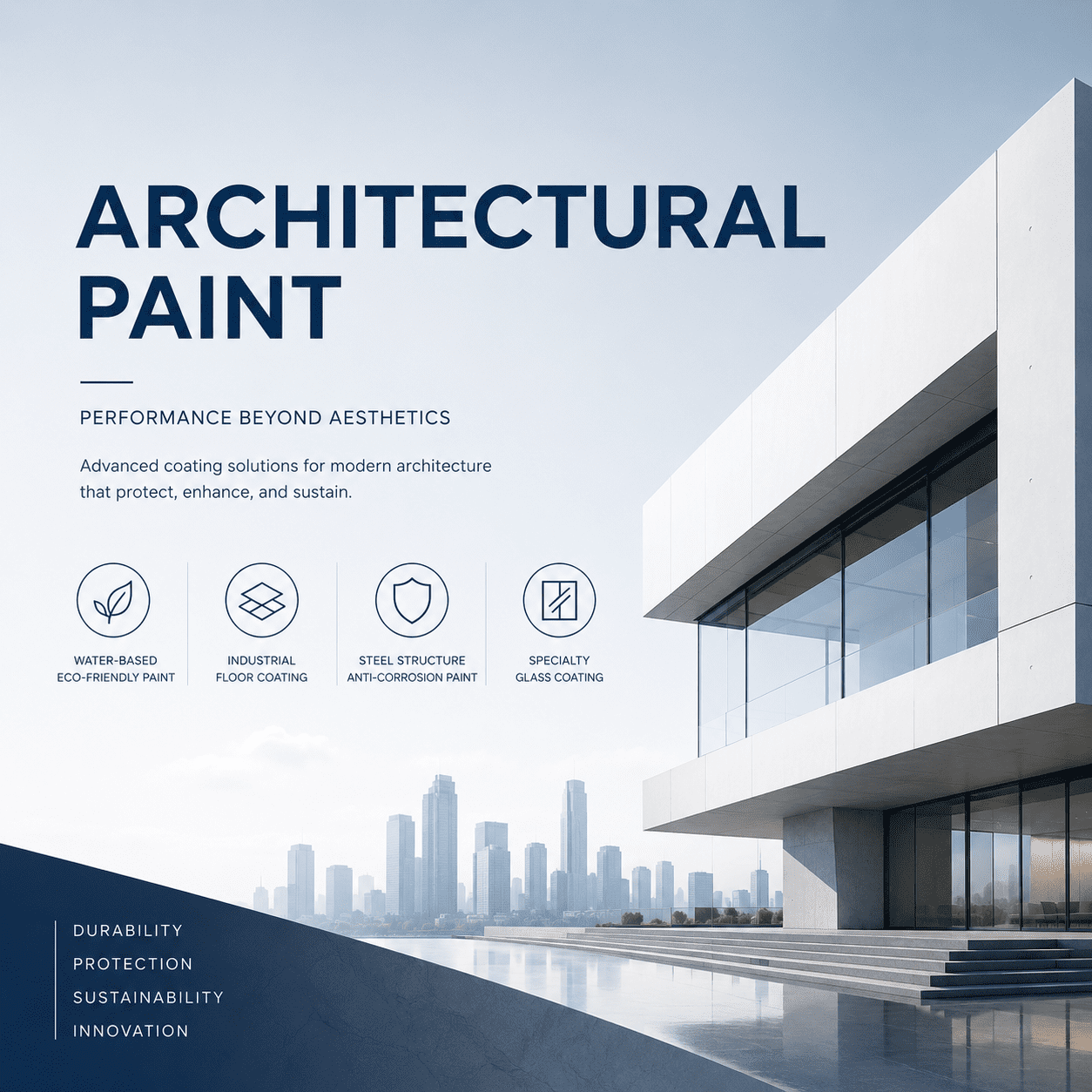
What are the Different Types of Paint Used in Modern Architecture?
If you asked an architect thirty years ago about paint, the conversation would likely center on aesthetics, eggshell finishes, matte textures, or the perfect shade of off-white. But walk onto a modern construction site in 2026, and the dialogue has shifted entirely toward performance chemistry.
Modern Architectural Paint is no longer a cosmetic layer; it is a multi-functional shield. From skyscrapers in Dubai withstanding extreme UV radiation to industrial warehouses in Vietnam handling heavy chemical spills, the "paint" we use today is an engineered system. In my two decades of manufacturing these solutions, I’ve learned that choosing the wrong type isn't just an aesthetic error—it’s a multi-million dollar liability.
The Shift Toward Water-based Eco-friendly Paint
The most significant revolution in modern architecture is the mandatory transition to water-based, eco-friendly paint. The days of high-VOC (Volatile Organic Compounds) solvent-based paints are numbered, driven by both environmental regulations and the "Green Building" movement.
In modern residential and commercial interiors, we now prioritize Low-VOC and Zero-VOC formulas. Why? Because the "new paint smell" is actually the sound of chemicals off-gassing, which can trigger Sick Building Syndrome. As a factory, we have spent 20 years refining water-borne polymers that match the durability of traditional oils without the toxic footprint. This is the cornerstone of Sustainable Architecture.
Industrial Floor Coating: The Science Beneath Your Feet
One of the most technically demanding categories of Architectural Paint is the Industrial Floor Coating. Whether it's a high-tech cleanroom, a busy cafe, or a massive logistics hub, the floor is the most abused surface in any building.
In modern architecture, we primarily deploy three types of floor systems:
1. Epoxy Resin Systems: Known for their extreme hardness and chemical resistance. They are the gold standard for heavy manufacturing.
2. Polyaspartic Coatings: The "fast-track" solution. They cure in hours rather than days and offer superior UV stability, preventing the "yellowing" common in traditional epoxies.
3. Micro-cement Hybrid Systems: For the "seamless" minimalist look that designer cafes crave, blending cement strength with resin flexibility.
The secret to a successful Industrial Floor Coating isn't the resin itself—it’s the Concrete Surface Preparation. Following ASTM D4258 guidelines to ensure the substrate is "open" and free of laitance is what separates a 10-year floor from a 6-month failure.
Steel Structure Anti-Corrosion Paint: Protecting the Skeleton
Modern architecture loves exposed steel; think of airport terminals, stadiums, and high-tech offices. But steel is inherently vulnerable. This is where Steel Structure Anti-Corrosion Paint comes into play.
We categorize these coatings based on the ISO 12944 corrosion environments (C1 to C5). For a coastal project (C5-M), we implement a three-layer Durable Coating System:
1. Primer: Typically a zinc-rich primer that acts as a sacrificial anode to prevent rust.
2. Intermediate Coat: An epoxy micaceous iron oxide (MIO) layer that creates a "flake-like" shield to block moisture and oxygen.
3. Topcoat: A high-performance polyurethane or fluorocarbon finish that provides UV protection and color retention.
When a client asks me why their steel beam is rusting through the paint, the answer is usually a lack of "Dry Film Thickness" (DFT) management. In industrial applications, if you don't measure the microns, you aren't protecting the building.
Specialty Glass Coating: The Niche of Modern Aesthetics
A unique category often overlooked in general discussions is Specialty Glass Coating. With the rise of glass-heavy architecture, we’ve developed water-based frosted glass paints that offer a high-end "acid-etched" look at a fraction of the cost and environmental impact.
These coatings aren't just for privacy. They are used in lighting fixtures, partition walls, and decorative facades. The key challenge in Specialty Glass Coating is adhesion. Glass is a non-porous, "hydrophilic" surface. Our 20 years of R&D have focused on molecular coupling agents that "stitch" the paint to the glass surface, ensuring it won't peel even in high-humidity VIP lounges or bathrooms.
Technical Standards
To truly understand Architectural Paint, you must look at the testing standards. We don't just "claim" durability; we prove it via:
1. Adhesion Testing (ASTM D3359): Ensuring the paint actually stays on the substrate.
2. Scrub Resistance: Critical for high-traffic corridors where walls must be cleaned thousands of times.
3. VOC Compliance: Meeting LEED v4.1 requirements to ensure air safety for occupants.
As a manufacturer, I’ve seen how "cheap" paint ends up being the most expensive choice. When you account for labor, downtime, and the cost of re-application, a high-quality Durable Coating System typically pays for itself within the first three years.
Final Verdict: How to Choose?
Modern architecture requires a bespoke approach. You cannot use the same formula for a hospital hallway as you do for a chemical plant floor.
1. Identify the Substrate: Is it concrete, steel, glass, or drywall?
2. Analyze the Environment: Is it high-traffic? High-UV? High-moisture?
3. Demand a "System" approach: Never buy just a topcoat. Ensure the primer, intermediate, and topcoat are chemically compatible.
FAQ: Expert Answers on Architectural Coatings
Q: Why should I switch to Water-based Eco-friendly Paint if solvents are cheaper?
A: Solvents are only "cheaper" if you ignore the cost of safety equipment, insurance, and the potential for regulatory fines. Water-based systems are now safer for your workers and allow for faster "return-to-service" for the building owner.
Q: How do I prevent my Industrial Floor Coating from peeling?
A: It almost always comes down to moisture. Perform an ASTM F2170 moisture test before application. If the concrete is too wet, the coating will fail, regardless of how expensive the resin is.
Q: Can Specialty Glass Coating be used outdoors?
A: Yes, provided it is a UV-stable formula. We recommend a specialized top-glaze for outdoor architectural glass to prevent fading from direct sunlight.